You do not lose your future all at once. It shows up in quieter ways first – needing longer to recover, feeling less steady on your feet, carrying more weight around the middle, waking up tired, or realizing your strength is not what it was five years ago. That is why longevity how to live longer is not a question for the very old. It is a midlife decision, and the earlier you make it with intention, the more options you keep.
For adults in their 40s, 50s, 60s, and beyond, living longer is only half the goal. The better question is this: how do you extend the years when you are strong, mentally sharp, mobile, and fully engaged in your life? Real longevity is not about chasing extremes. It is about building a body and mind that stay capable under stress, resilient through change, and ready for what your next chapter demands.
Longevity how to live longer starts with health span
Life span is the number of years you live. Health span is the number of years you live well. That distinction matters.
Many people focus on the wrong target. They search for one miracle supplement, one perfect diet, or one hidden biomarker that promises extra years. But the evidence points somewhere less glamorous and far more powerful: your daily systems. Strength, sleep, nutrition, movement, recovery, stress regulation, and purpose consistently shape whether those added years feel vibrant or limited.
This is especially true in midlife, when hormone shifts, muscle loss, reduced insulin sensitivity, and accumulated stress begin to change the rules. What worked at 35 may stop working at 55. That does not mean decline is inevitable. It means your strategy needs to mature.
The four pillars of longevity that matter most
1. Protect and build muscle
Muscle is not just about appearance. It is one of the strongest predictors of function, metabolic health, injury resistance, and independence as you age. When you lose muscle, everyday tasks become harder. Balance suffers. Blood sugar control worsens. Falls become more dangerous. Recovery takes longer.
The answer is not punishing workouts. It is consistent resistance training with enough challenge to maintain or increase lean mass. For many adults, that means training two to four times per week, with a focus on compound movements, proper form, and progression over time. Walking is valuable, but it does not replace strength training.
There is a trade-off here. More exercise is not always better if it leaves you inflamed, exhausted, or injured. The right program respects your joints, your current conditioning, and your recovery capacity.
2. Eat to support metabolism, not just weight loss
Most midlife adults have tried some version of eating less and hoping for the best. That often backfires. Severe restriction can cost you muscle, energy, and consistency.
A better approach supports longevity by stabilizing blood sugar, preserving lean tissue, and reducing chronic inflammation. In practical terms, that usually means enough protein, plenty of fiber, minimally processed foods, healthy fats, and calorie intake that aligns with your goals without becoming punitive.
Nutrition also becomes more personal with age. Some people thrive with a higher-protein Mediterranean-style approach. Others need to pay closer attention to alcohol, late-night eating, or under-fueling after training. If energy is low, sleep is poor, and cravings are high, the issue may not be discipline. It may be physiology.
3. Treat sleep like a performance tool
If you want to live longer and better, sleep is not optional maintenance. It is a primary driver of brain health, hormone regulation, immune function, appetite control, and recovery.
Poor sleep raises the cost of everything else. It makes training feel harder, increases hunger, lowers willpower, worsens blood sugar control, and leaves you mentally dull. Over time, that creates a pattern many people misread as aging when it is actually chronic under-recovery.
Aim for regular sleep and wake times, a dark cool room, reduced alcohol, and less screen exposure before bed. If snoring, frequent waking, or daytime fatigue are ongoing, it is worth investigating further. Sleep apnea and other sleep disorders are common in midlife and often missed.
4. Build resilience against stress
Stress is not only emotional. It is cumulative wear on the system. Long work hours, poor sleep, unresolved grief, overtraining, under-eating, social isolation, and constant stimulation all add to the load.
The body can handle stress when recovery keeps pace. Trouble begins when pressure becomes the baseline. Cortisol remains elevated, cravings increase, blood pressure rises, and motivation drops. You can still look productive while your system is being depleted.
Longevity demands stress literacy. That means knowing when to push and when to recover. Breathwork, time outdoors, mobility sessions, meaningful relationships, and unstructured downtime are not soft habits. They are part of a serious strategy for staying mentally and physically durable.
Why mobility and balance are longevity skills
When people think about aging well, they often focus on weight and lab numbers. Those matter. But mobility and balance deserve equal respect because they determine how confidently you move through the world.
Joint stiffness, reduced range of motion, and poor balance can slowly shrink your life. You stop hiking, traveling, lifting grandchildren, getting down on the floor, or moving with ease. Then activity drops, strength declines, and the cycle accelerates.
Mobility work does not need to be complicated. A focused routine for hips, shoulders, spine, and ankles can improve how you train and how you feel day to day. Balance training can be woven into strength work or practiced in short sessions. Small investments here pay off for years.
Brain health and purpose are part of the longevity equation
A longer life without clarity, curiosity, or connection is not the goal. Cognitive health is shaped by many of the same habits that support the body: exercise, sleep, nutrition, and metabolic health. But there is another layer that matters deeply in the second half of life – purpose.
People age better when they have reasons to stay engaged. That might be leadership, family, service, creativity, faith, business, adventure, or mentoring. Purpose organizes behavior. It gives your health plan a why.
This is one reason transformation in midlife can be so powerful. You are not starting from scratch. You are bringing experience, discipline, and perspective. When those qualities are directed toward health, the results can be extraordinary.
What to stop doing if you want longevity
The path forward is not only about adding better habits. It is also about retiring the patterns that quietly age you faster.
Stop training like you are trying to prove something. Stop treating exhaustion as evidence of success. Stop accepting weight gain, weakness, poor sleep, or daily pain as unavoidable. Stop jumping between extreme plans that ignore your age, hormones, recovery needs, and real life.
Longevity favors consistency over intensity. It rewards people who build systems they can respect for years.
A smarter plan for how to live longer
If you want a practical framework, think in seasons rather than quick fixes. Spend the next 90 days improving the basics with precision. Strength train consistently. Walk often. Increase protein. Improve sleep timing. Reduce the habits that sabotage recovery. Track a few meaningful markers like waist circumference, strength, energy, resting heart rate, and how well you move.
Then reassess. If progress stalls, look at the bottleneck. It may be stress. It may be under-recovery. It may be poor programming or nutrition that is too restrictive. The answer is rarely more punishment.
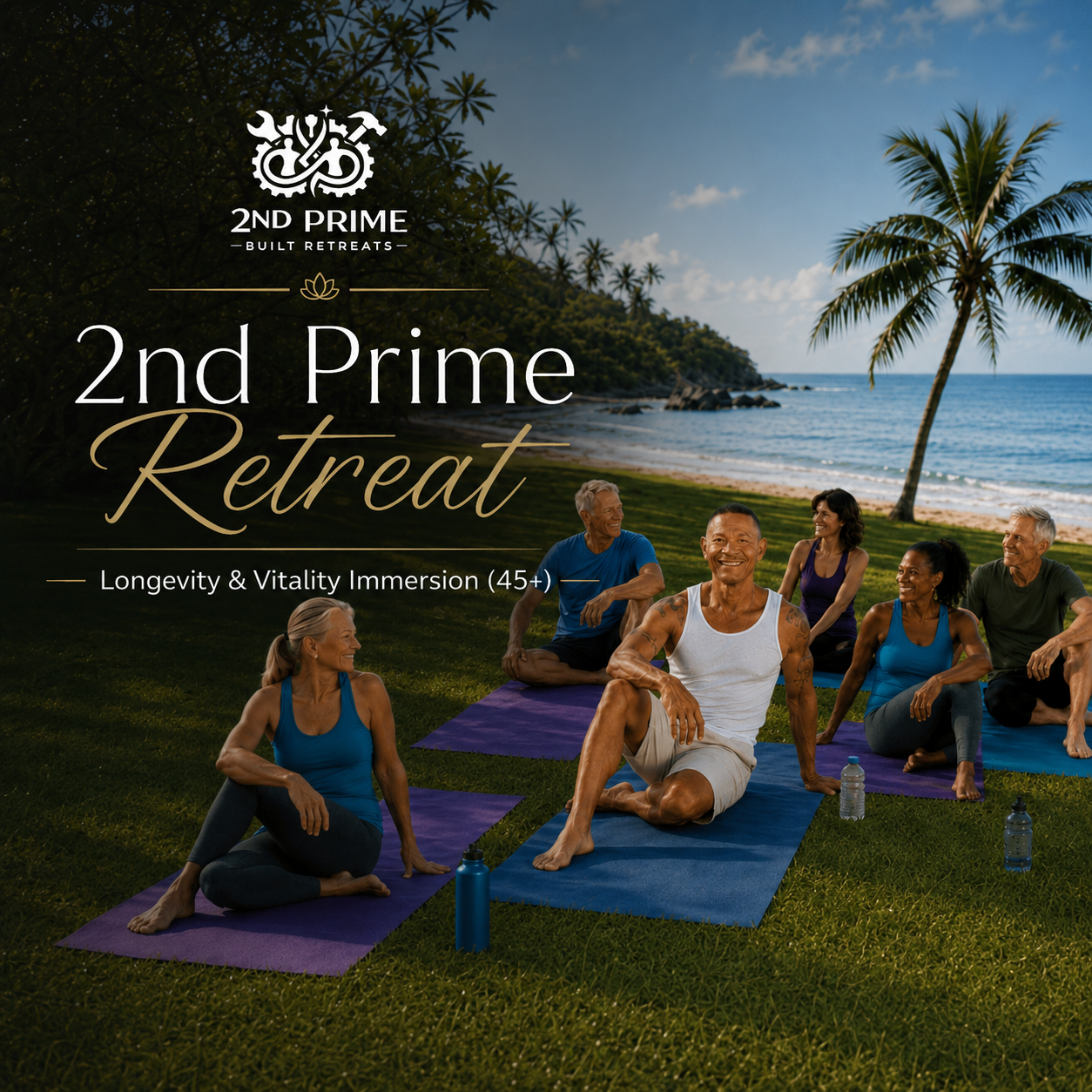
This is where guided support can change everything. For many adults, the barrier is not information. It is execution, accountability, and having a method designed for this life stage. A structured longevity experience such as 2nd PRIME Built can help turn scattered intentions into a clear plan built around strength, mobility, recovery, resilience, and sustainable health optimization.
The strongest vision of aging is not passive. It is earned. You build it in workouts that protect your future, meals that support energy, nights of real recovery, and decisions that keep your body capable. Start there, and the years ahead can become more than extra time. They can become your second prime.

2 Responses