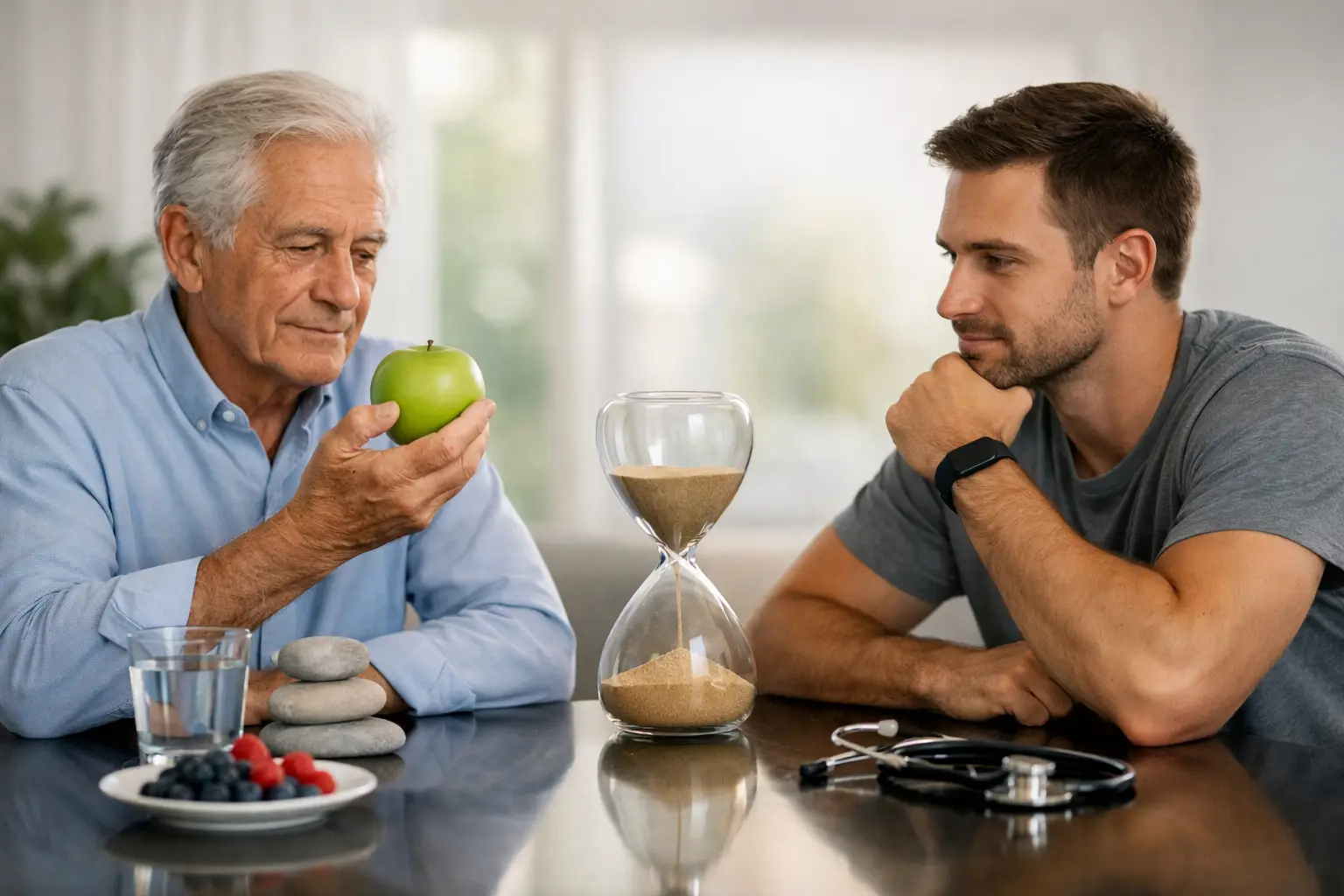
A man can make it to 85 and spend the last 20 years tired, inflamed, medicated, and limited. Another can reach 82 with strength, clarity, purpose, and the ability to hike, travel, train, and fully show up for life. That is the real difference in longevity vs life span, and it matters more in midlife than most people realize.
If you are in your 40s, 50s, 60s, or beyond, this is not a technical distinction. It is a strategic one. Life span measures how long you live. Longevity is broader. It reflects how well you live over time – physically, mentally, and functionally. For adults who want to preserve energy, performance, independence, and identity, that difference changes everything.
Longevity vs life span: the basic difference
Life span is the simpler metric. It refers to the total number of years a person lives. It is the number that shows up in demographic data, actuarial tables, and population studies. If someone dies at 88, their life span was 88 years.
Longevity is often used as if it means the same thing, but in practice it carries more weight. It points to sustained vitality across those years. It asks a better question: not only how long are you alive, but what is the quality of your capacity while you are alive?
That distinction matters because modern medicine has become better at extending life span than preserving full-function longevity. Many people are living longer with chronic disease, reduced mobility, poor sleep, rising body fat, lower muscle mass, and declining resilience. The calendar may be improving while the lived experience is not.
For a midlife adult, that is the gap worth paying attention to.
Why longevity vs life span becomes urgent after 45
In early adulthood, the body can cover for a lot. You can sleep less, recover poorly, eat inconsistently, sit too much, and still look reasonably functional. Midlife changes that bargain.
Muscle mass becomes harder to maintain. Hormones shift. Recovery slows. Bone density can decline. Stress becomes more expensive. Metabolic health often starts to drift. Mobility restrictions that once seemed minor begin to affect how you train, move, and feel day to day.
This is why passive aging is so costly. If you wait for a major diagnosis or a sharp decline in function, you are already working from a deficit. The better move is to build longevity before fragility begins to define the next decade.
For many adults, this is also an identity issue. They do not just want more birthdays. They want to stay capable. They want to keep leading, traveling, playing, lifting, thinking clearly, and feeling at home in their body. They want a second prime, not a long fade.
A longer life span is not always a better outcome
There is a hidden trade-off in the way people talk about aging. More years sounds automatically better, but that depends on what those years look like.
If added years come with dependence, pain, cognitive decline, or deep physical limitation, life span alone is not a complete win. That is not pessimism. It is precision.
The more useful goal is to increase health span inside your life span. Health span is the period of life spent in good health, with strong function and low disease burden. It is the stretch of years where you can do what you want your life to include.
This is where the conversation becomes practical. A strong longevity strategy is not about chasing immortality or obsessing over biohacks. It is about protecting the systems that most directly determine how you age.
What actually drives longevity
For adults in midlife, longevity is shaped less by one miracle intervention and more by a handful of foundational pillars practiced consistently.
Muscle is one of the strongest predictors of resilient aging
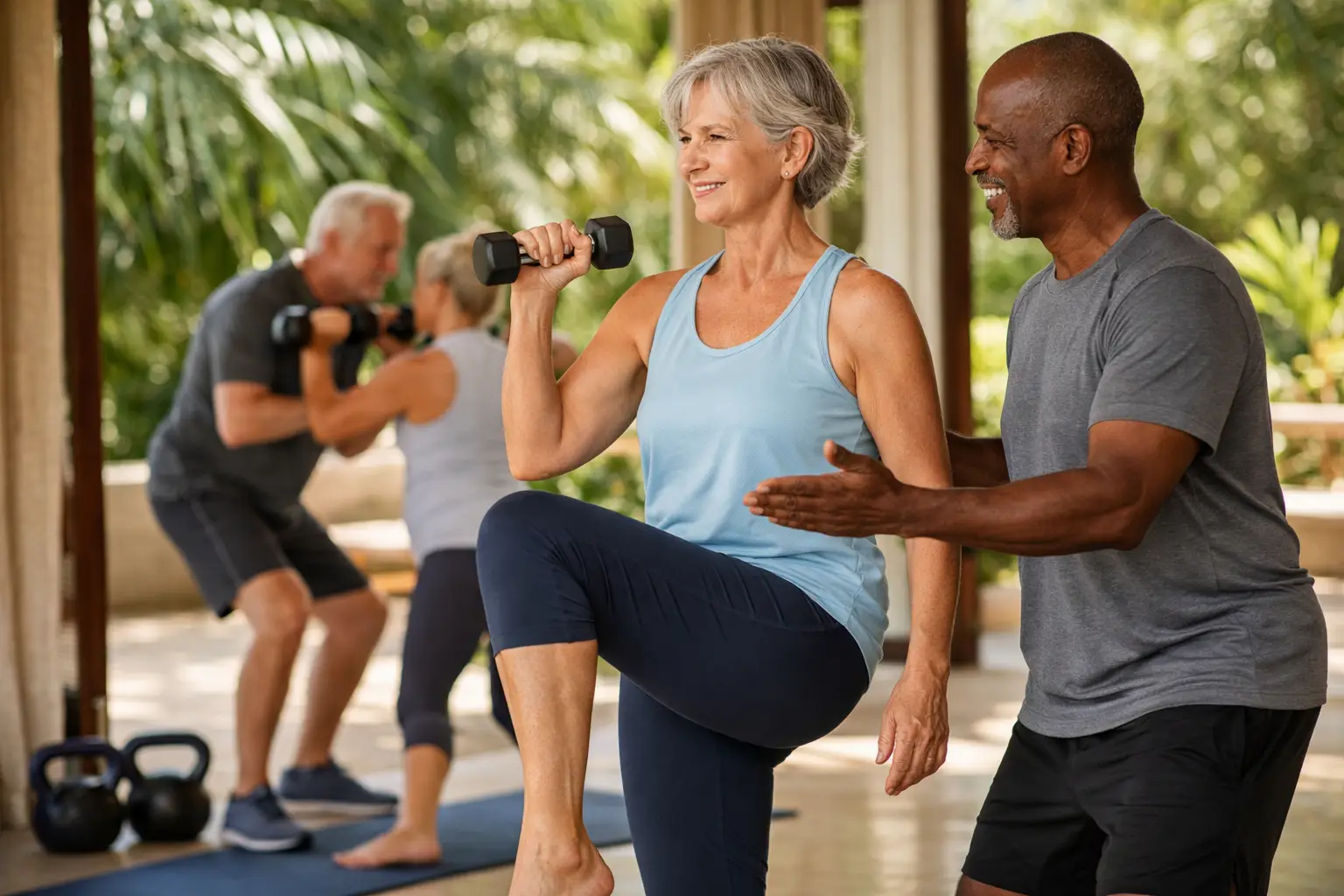
Strength is not cosmetic after 45. It is protective. Higher muscle mass and better strength are associated with better metabolic health, improved insulin sensitivity, reduced fall risk, stronger bones, and greater independence later in life.
This is one reason strength training belongs at the center of any serious longevity plan. It helps preserve lean tissue, support hormone health, and keep the body capable. Cardio matters, but cardio alone is not enough.
Mobility keeps strength usable
A strong body that cannot move well will still age into limitation. Joint range, balance, coordination, and movement quality affect everything from training capacity to injury risk to daily freedom.
Mobility work is often overlooked because it does not feel dramatic. But over time, it protects your ability to keep doing the things that make life feel fully lived.
Nutrition determines recovery, body composition, and energy
Nutrition for longevity is not about punishment. It is about preserving metabolic health, supporting muscle, reducing inflammation, and fueling stable energy.
For many adults, this means adequate protein, better blood sugar control, fewer ultra-processed foods, and a more intentional relationship with alcohol, meal timing, and recovery nutrition. The right approach depends on the individual. A high-performing 52-year-old woman in perimenopause may need a different strategy than a 63-year-old man managing visceral fat and poor sleep.
Recovery is not optional anymore
Poor sleep, chronic stress, and constant sympathetic overload accelerate aging in ways people often underestimate. They affect hormones, appetite, memory, body composition, and cardiovascular health.
In midlife, recovery is where many high achievers lose ground. They know how to push. They are less practiced at restoring. Real longevity requires both.
Purpose and resilience matter more than people think
Mental resilience, emotional regulation, and a clear sense of purpose influence behavior over decades. People who age well usually have more than discipline. They have a reason to stay engaged.
That reason may be family, leadership, adventure, service, or personal reinvention. Whatever form it takes, purpose tends to support healthier choices, stronger relationships, and better long-term follow-through.
The biggest mistake in the longevity vs life span conversation
The biggest mistake is treating aging as a medical event instead of a training process.
Many people wait until they feel old to respond. They look for a single fix – a hormone protocol, a supplement stack, a weight-loss sprint, a short detox. Some of those tools may have value, but none can replace the deeper work of rebuilding capacity.
Capacity is what gives longevity substance. It is your ability to produce force, recover from effort, tolerate stress, regulate energy, move with confidence, and stay mentally present. When those capacities improve, your years tend to improve with them.
This is why the best longevity programs feel structured rather than random. They train the body and the person behind the body. They build strength, educate decision-making, restore movement, and create accountability around habits that actually last.
How to think about your own longevity in midlife
A useful question is not, “How long might I live?” A better question is, “What do I want to still be able to do at 60, 70, and 80?”
Your answer changes your priorities.
If you want to travel actively, carry your own bags, get up from the floor easily, play with grandchildren, maintain a strong marriage, lead with energy, and feel confident in your body, then your plan must reflect those outcomes now. That means training for function, not just appearance. It means treating sleep as performance support, not a luxury. It means building habits you can sustain for years, not chasing extremes for 30 days.
This is also where personalization matters. Two people the same age can have very different starting points. One may need to restore metabolic health first. Another may need to address joint limitations, alcohol use, or severe stress load. Another may be relatively fit but missing a coordinated strategy. The goal is the same, but the path is individual.
That is why guided environments can accelerate progress. When adults have expert coaching, age-aware programming, and clear accountability, they often stop guessing and start executing. That shift alone can change the trajectory of the next decade. It is part of why transformation-based experiences like 2nd PRIME Built resonate so deeply with people who are done collecting advice and ready to build a plan.
What matters most
Between longevity vs life span, longevity is the more meaningful target because it asks for more from you and offers more in return. It is not just extra years. It is usable years.
And usable years are built, not wished for.
You do not need to become obsessed with aging. You do need to become intentional. Midlife is not the beginning of decline unless you train it that way. It can be the phase where you restore energy, reclaim strength, sharpen your focus, and build a body that supports the life you still want to live.
The goal is not simply to be here longer. The goal is to arrive in your later decades strong enough to enjoy the life you worked so hard to create.

4 Responses