
At 48, 55, or 67, the question is rarely whether you should take your health seriously. The real question is whether the program you choose is built for this stage of life. The best wellness programs for midlife adults do not treat you like a beginner, a burnout, or a twenty-something in decline. They recognize that midlife brings different physiology, different priorities, and a sharper standard for what is worth your time.
That matters because a generic wellness plan can waste months. If your energy is slipping, your body composition is changing, your joints feel less forgiving, or stress is hitting harder than it used to, you need more than motivation. You need a system designed for adults who want to restore strength, protect longevity, and stay fully engaged in life.
What the best wellness programs for midlife adults actually include
A strong midlife wellness program is not a random mix of yoga, green juice, and inspirational messaging. It should be structured around measurable outcomes that matter after 45: strength, mobility, metabolic health, recovery capacity, cognitive resilience, and long-term independence.
Strength training belongs near the center of that structure. In midlife, preserving muscle is not just about appearance. It supports glucose control, bone health, balance, hormone health, and daily performance. Programs that avoid resistance work entirely may feel gentle, but they often miss one of the biggest levers for healthy aging.
Mobility and movement quality matter just as much. Many adults in this stage do not need harder workouts. They need smarter ones. A good program improves joint function, posture, stability, and the ability to move without compensation. That can mean fewer aches, better training results, and more confidence in the body you live in every day.
Nutrition should also be practical, not ideological. Midlife bodies often respond differently to stress, alcohol, sleep loss, and under-eating than they did at 30. The best programs teach sustainable eating patterns that support muscle retention, energy, inflammation control, and body composition without turning every meal into a math problem.
Recovery is another non-negotiable. If a program talks only about output and never about sleep, nervous system regulation, breathwork, or recovery strategies, it is incomplete. Midlife wellness is not built by grinding harder. It is built by training with intention and recovering well enough to adapt.
Why age-specific design matters in midlife
A wellness program can look impressive on paper and still be wrong for you. That is especially true in midlife, when hormone shifts, accumulated stress, old injuries, and changes in recovery all influence results.
For women, menopause and perimenopause can affect sleep, body composition, mood, bone density, and training tolerance. For men, declining testosterone, higher visceral fat, reduced mobility, and stress-related metabolic changes may become more pronounced. A useful program acknowledges these realities without turning them into excuses.
This is where age-specific coaching makes a difference. Midlife adults generally do better with programming that combines challenge and calibration. You want expert guidance that pushes progress while respecting where you are now. That is very different from a bootcamp mentality or a spa model that leaves out the real work.
The best wellness programs for midlife adults follow five pillars
If you are comparing options, look for programs built around a clear framework. The strongest ones usually share five pillars.
1. Strength and body composition support
Muscle is one of your best assets in the second half of life. It protects function, supports metabolism, and helps you stay capable. Programs should include resistance training that is scalable, coached, and appropriate for different experience levels.
2. Mobility and joint health
Tight hips, stiff shoulders, and lower back tension are not just annoyances. They can limit training, increase injury risk, and reduce quality of life. Good programs restore movement patterns, not just calorie burn.
3. Nutrition for longevity
You need education you can actually use. The right program teaches how to eat for energy, recovery, lean mass, and long-term health in a way that fits real life, business travel, family meals, and social living.
4. Recovery and stress regulation
A high-performing life requires recovery capacity. Sleep quality, nervous system balance, and emotional resilience all affect physical outcomes. Programs that include recovery modalities and stress management tend to produce more durable results.
5. Personalization and accountability
Midlife adults rarely fail because they lack information. More often, they lack a plan tailored to their body, schedule, and goals. The best programs provide individualized guidance and enough accountability to turn insight into action.
Retreat, clinic, membership, or coaching?
There is no single format that works for everyone. The right choice depends on what kind of change you need.
A weekly wellness membership can work well if you already have momentum and want consistency. It is useful for maintaining habits, but it may not create a major reset if you are stuck in the same routines that produced your current results.
A medical or clinical program may be valuable if you need deeper diagnostics, hormone review, metabolic testing, or physician oversight. That route can provide clarity, but some clinically driven models fall short on implementation. You leave with data, yet no clear system for changing your daily behavior.
One-on-one coaching offers personalization and flexibility. It can be highly effective for busy professionals who want precision and privacy. The trade-off is that results depend heavily on your follow-through, and the experience can feel isolating if you also need immersion and momentum.
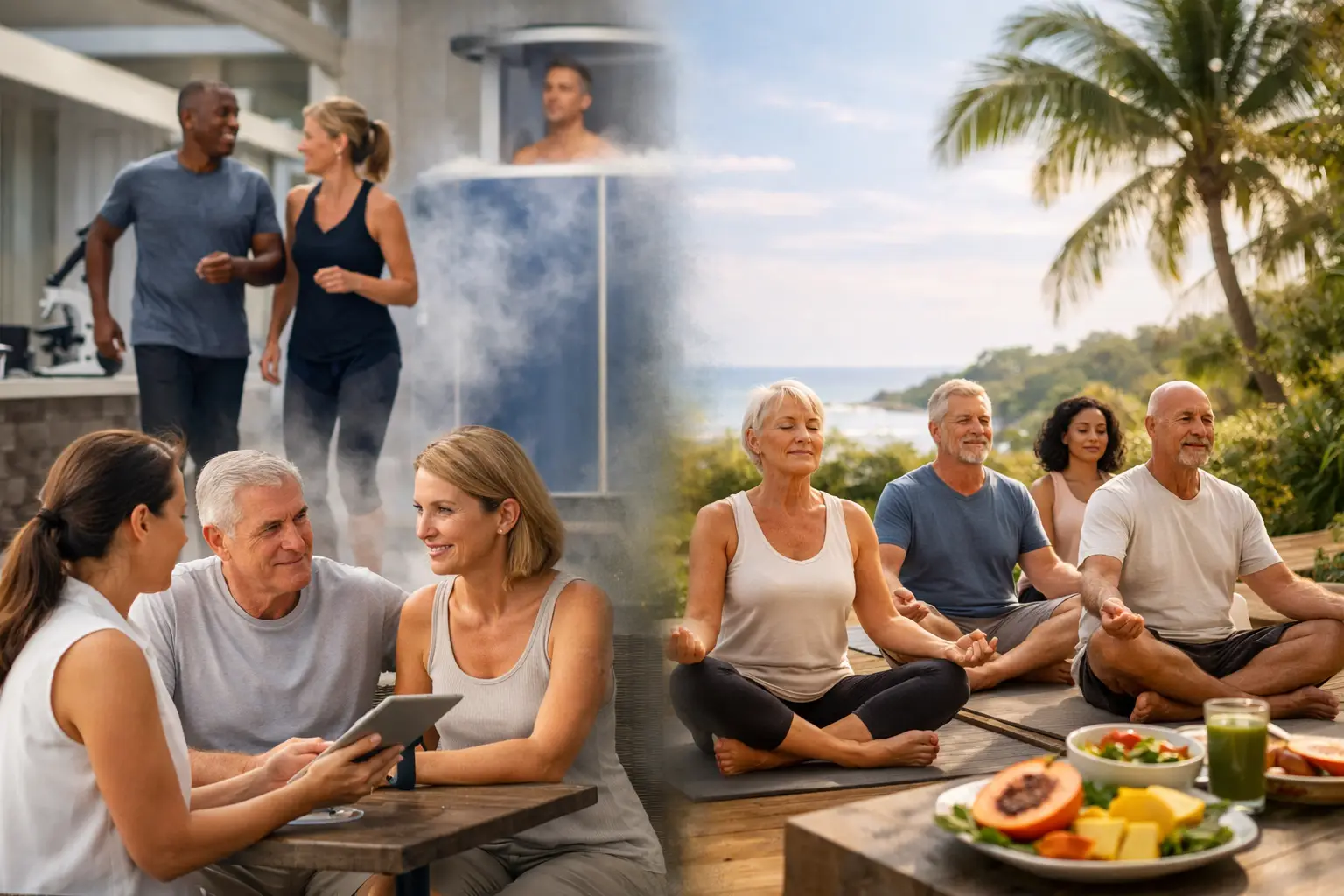
Retreat-based programs are different. They compress education, training, recovery, and coaching into a focused environment that removes distractions. For many midlife adults, that level of immersion creates a sharper breakthrough. You are not trying to rebuild your health between meetings, family obligations, and digital noise. You step out of your routine long enough to reset it.
That said, not every retreat is one of the best wellness programs for midlife adults. Some are too passive. Others are too extreme. The strongest retreat models combine expert coaching, age-specific programming, recovery, and a real transition plan for life after the retreat.
How to tell if a program is worth the investment
Price alone does not tell you much. A cheaper program that gives generic advice may cost more in lost time than a premium experience that delivers structure, expertise, and follow-through.
Start by looking at the design. Is it clearly built for adults 45 to 70, or is it broad enough to fit everyone and therefore tailored to no one? Then look at the coaching. Are the instructors qualified to address strength, mobility, nutrition, and recovery in an integrated way, or are these pieces disconnected?
Next, assess the depth of personalization. Group energy can be powerful, but midlife bodies benefit from individual attention. The best programs balance community with coaching that addresses your specific goals, limitations, and health realities.
Finally, ask what happens after the program ends. Transformation is not a five-day feeling. It is a set of behaviors you can sustain when you return to work, travel, family life, and real-world pressure. A worthwhile program should leave you with a roadmap, not just a memory.
What a premium midlife program gets right
A premium program should feel focused, not flashy. It should respect your time, your intelligence, and your stage of life. That means evidence-informed coaching, smart progression, and an environment that supports effort without ego.
This is why high-touch models often outperform high-volume ones. Smaller groups make room for real coaching, meaningful accountability, and safer progress. They also create the kind of peer environment many midlife adults want – capable people who are serious about health, open to growth, and unwilling to drift into decline.
Programs built around healthy aging should also hold a bigger vision. The goal is not simply to lose a few pounds before summer or survive another stressful year. The goal is to extend strength, confidence, clarity, and freedom into the decades ahead. That is the promise behind well-designed experiences like 2nd PRIME Built, which frame midlife as a second prime rather than a slow fade.
Choosing your next step
The best program for you is the one that matches both your physiology and your ambition. If you need medical answers, start there. If you need habit support, coaching may be enough. If you need a full reset – physical, mental, and strategic – an immersive wellness retreat may be the better move.
Midlife is not the time to settle for vague wellness. Choose a program that helps you restore energy, rebuild strength, improve mobility, and create a plan you can trust. Your next decade will be shaped less by your age than by the standards you set for it today.